Bacteriostatic water contains 0.9% benzyl alcohol, which works out to 9 mg per millilitre. Benzyl alcohol is a preservative: it keeps bacteria from multiplying inside the vial after the stopper has been punctured. Remove it and you have plain sterile water, which is single use.
Everything that makes bacteriostatic water useful comes from this one ingredient, and most of the confusion about the product comes from misunderstanding it. Let’s go through what it is, what it does, and where its limits are.
What benzyl alcohol is
Benzyl alcohol is an aromatic alcohol, a small organic molecule consisting of a benzene ring with an attached alcohol group. It occurs naturally in some plants and essential oils, and it is manufactured for use as a preservative and solvent in pharmaceutical and cosmetic products.
The word “alcohol” causes most of the trouble here. Chemically, “alcohol” describes a family of compounds, not a single substance:
| Compound | Where you meet it | Same as benzyl alcohol? |
|---|---|---|
| Ethanol | Beer, wine, spirits, hand sanitizer | No |
| Isopropyl alcohol | Rubbing alcohol, swabs | No |
| Benzyl alcohol | Preservative in pharmaceutical and cosmetic products | Yes, this one |
So bacteriostatic water contains alcohol in the chemical sense, but not the kind in a drink or a sanitizer bottle.
What it does in the vial
The FDA label describes bacteriostatic water as containing “0.9% (9 mg/mL) of benzyl alcohol added as a bacteriostatic preservative.” That phrase carries the whole function.
Every time a needle passes through a stopper, there is a small chance of carrying microorganisms in. In preservative-free water, anything that gets in can multiply freely, which is why plain sterile water is packaged for a single use. Benzyl alcohol disrupts microbial cell membranes enough to prevent that multiplication, so a low number of stray organisms stays a low number instead of becoming a contaminated vial.
Bacteriostatic, not bactericidal. It holds growth in check. It does not sterilize a contaminated solution, and it does not substitute for clean technique when you draw from the vial.
Why 0.9%?
0.9% is the concentration specified on the label for Bacteriostatic Water for Injection, USP, and it reflects a balance rather than a maximum:
- Enough to work. The preservative has to suppress growth reliably across the in-use period of a multiple-dose container, which under USP <797> runs up to 28 days after first entry.
- Not more than needed. Benzyl alcohol is not inert. It is an additive that ends up in whatever you dissolve, so the concentration is kept at the level that does the job rather than higher.
A useful coincidence to be aware of: normal saline is also “0.9%,” but of sodium chloride, not benzyl alcohol. Two different products, two different 0.9% figures, and a common source of mix-ups. See bacteriostatic water vs saline.
Does the preservative affect what you dissolve?
Sometimes, which is why preservative-free sterile water exists as a separate product. Most routine preparations are unaffected, but some materials are documented as sensitive to benzyl alcohol, and some analytical methods are affected by anything extra in solution.
The rule is simple: if the documentation for the material names a diluent, use that diluent. If it says preservative-free, that is a specific instruction, not a preference.
Where benzyl alcohol must not be used
The FDA label is explicit on one point: because of the potential toxicity of benzyl alcohol in newborns, solutions containing it must not be used in neonates. The label also warns against administering bacteriostatic water intravenously without a solute, because doing so can cause hemolysis, which relates to the solution being hypotonic rather than to the preservative.
Those are clinical warnings from the product label. They are the reason preservative-free options exist, and they are worth knowing even if your use is confined to a bench. Anything involving people is a question for a clinician, not for a supply guide.
How to confirm it is there
Since bacteriostatic water and sterile water look identical, the label is the only evidence:
- Look for the word “bacteriostatic” in the product name.
- Look for “benzyl alcohol” and a stated concentration, normally 0.9% or 9 mg/mL.
- Look for “multiple-dose” on the vial or carton.
- If a listing or label states none of these, treat the product as preservative-free sterile water.
Products sold as “reconstitution solution” vary in composition and some contain additional ingredients such as acetic acid, so the name alone tells you nothing about the preservative.
Storage: the preservative does not change the rules
Benzyl alcohol buys you re-entry, not immortality. The FDA label lists storage at 20 to 25 °C, refrigeration is not required, and an opened vial is still discarded at 28 days. Full detail in how long bacteriostatic water lasts.
The short version
Benzyl alcohol at 0.9% is the entire difference between a vial you can use for a month and a vial you use once. It inhibits bacterial growth rather than sterilizing, it is not the alcohol people think of, and it is the reason preservative-free sterile water exists for the cases where an additive is unwelcome.
Next: the full guide to bacteriostatic water, or the direct comparison with sterile water.
Frequently asked questions
Does bacteriostatic water contain alcohol?
Yes, benzyl alcohol at 0.9%, which is 9 mg per mL. Benzyl alcohol is an aromatic alcohol used as a preservative and is chemically different from ethanol.
What does benzyl alcohol do in bacteriostatic water?
It acts as a bacteriostatic preservative, meaning it inhibits bacteria from multiplying in the vial between withdrawals. That is what allows the same vial to be entered repeatedly.
Why 0.9% specifically?
0.9% (9 mg/mL) is the concentration specified on the FDA label for Bacteriostatic Water for Injection, USP. It is the level established as effective at suppressing bacterial growth in a multiple-dose container.
Is benzyl alcohol the same as rubbing alcohol?
No. Rubbing alcohol is usually isopropyl alcohol, and drinking alcohol is ethanol. Benzyl alcohol is a different compound used mainly as a preservative and solvent.
Does benzyl alcohol kill bacteria?
At this concentration it inhibits growth rather than reliably killing organisms, which is why the product is described as bacteriostatic rather than bactericidal.
Are there situations where benzyl alcohol should be avoided?
Yes. The FDA label states that solutions containing benzyl alcohol must not be used in newborns, and some protocols specify preservative-free diluents. When documentation calls for preservative-free, follow it.
Sources
- Bacteriostatic Water for Injection, USP prescribing label, DailyMed, U.S. National Library of Medicine dailymed.nlm.nih.gov
- USP General Chapter <797> Pharmaceutical Compounding: Sterile Preparations usp.org
We write from primary sources such as FDA drug labels and USP standards. See our editorial policy. Spot an error? Email [email protected].
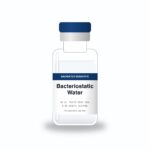
From BacWater Scientific
10 mL bacteriostatic water, stocked in the US
0.9% benzyl alcohol, multi-dose vials. The per-vial price drops automatically at 3, 5 and 10 vials.