Bacteriostatic water is sterile water that contains 0.9% benzyl alcohol. The benzyl alcohol is a preservative: it keeps bacteria from multiplying after the vial is opened, so the same vial can be drawn from again and again instead of being thrown away after one use.
That one sentence covers most of what people need. But bacteriostatic water, usually shortened to bac water, is also one of the most misunderstood supplies you can buy. Search results contradict each other on whether it needs refrigeration, whether it is the same as sterile water or saline, and how long it lasts. Much of that confusion disappears once you read the product’s actual label, so that is where this guide starts.
Below you’ll find what bacteriostatic water is made of, what “bacteriostatic” really means, what it’s used for, how it compares with similar products, how long it lasts, how it’s regulated, and how to tell whether what you’re holding is the real thing.
What is bacteriostatic water, exactly?
The FDA-approved label for Bacteriostatic Water for Injection, USP describes it as a “sterile, nonpyrogenic preparation of water for injection” containing “0.9% (9 mg/mL) of benzyl alcohol added as a bacteriostatic preservative.”
Three terms in that description do a lot of work:
- Sterile means the contents are free of living microorganisms when the vial is sealed.
- Nonpyrogenic means it is free of pyrogens, substances such as bacterial endotoxins that can cause fever-like reactions. Sterile and pyrogen-free are separate requirements, and pharmaceutical water has to meet both.
- Water for injection is a specific, highly purified grade of water defined by the United States Pharmacopeia (USP). It is purer than distilled or deionized water from a store.
Put together, bacteriostatic water is ultra-pure, sterile, pyrogen-free water with a single preservative added. There is nothing else in it.
What is bacteriostatic water made of?
The ingredient list is short. According to the label:
| Component | Amount | Role |
|---|---|---|
| Water for injection | Remainder of the volume | The solvent. Sterile and pyrogen-free. |
| Benzyl alcohol | 0.9%, which is 9 mg per mL | Bacteriostatic preservative |
| pH | 5.7 (range 4.5 to 7.0) | Slightly acidic to neutral |
| Sodium chloride (salt) | None | Not present. That is what separates it from saline. |
Because there is no salt or other dissolved solute, bacteriostatic water is hypotonic: it has a lower concentration of dissolved particles than body fluids. That detail matters in medical settings, which is why the label warns against using it without first dissolving something in it. For lab work, what matters is that it is a clean, simple solvent with a known, fixed preservative level.
Does bacteriostatic water contain alcohol?
Yes, but not the kind most people think of. Benzyl alcohol is an aromatic alcohol, a small organic molecule with a benzene ring, used widely as a preservative in pharmaceutical and cosmetic products. It is chemically different from ethanol, the alcohol in drinks and hand sanitizer. At 0.9%, it is present at a low, fixed concentration chosen to suppress bacterial growth.
What does “bacteriostatic” mean?
The word comes from “bacterio” (bacteria) and “static” (standing still). A bacteriostatic agent stops bacteria from growing and multiplying. A bactericidal agent kills them.
That distinction explains what bac water can and cannot do:
- It can keep a small number of stray bacteria, introduced when a needle passes through the stopper, from multiplying into a contaminated vial.
- It cannot sterilize a solution that has been badly contaminated, or make up for poor technique.
So the preservative is a safety margin for repeated use, not a disinfectant. Clean handling still matters every single time. Our guide on drawing from a multi-dose vial covers the technique.
Why does the preservative matter?
Every time a sealed vial is punctured, there is a small chance of introducing microorganisms. Plain sterile water has no defense against that, so once opened it is treated as single use: draw what you need and discard the rest.
Bacteriostatic water changes the economics. With a preservative on board, a single vial can serve many withdrawals over several weeks. That is why bacteriostatic water is sold in multiple-dose vials, typically with a rubber stopper that reseals after each puncture, while sterile water usually comes in single-dose containers.
In one line: sterile water is clean but single use. Bacteriostatic water is clean and reusable for a limited time, because of the benzyl alcohol.
What is bacteriostatic water used for?
Bacteriostatic water is a diluent. It exists to dissolve or dilute other materials. It has no function on its own.
In pharmaceutical use
The official product name is Bacteriostatic Water for Injection, USP, and its label states that it is indicated “for diluting or dissolving drugs” that are then given by injection. In pharmacies and clinics, it is used to prepare medications that ship as powders and must be dissolved before use. Its label also lists situations where it should not be used, including in newborns, because of the potential toxicity of benzyl alcohol, and for fluid replacement.
In the laboratory
In research settings, bacteriostatic water is widely used to reconstitute lyophilized materials. Lyophilized means freeze-dried: many sensitive compounds, including research peptides, are shipped as a dry powder because they are more stable that way. Before use, the powder is dissolved in a measured volume of liquid, and bacteriostatic water is a common choice when the same vial of water will be drawn from multiple times.
Labs also use it to prepare dilutions and working solutions where a sterile, preserved solvent with a fixed composition is useful.
If you’re working out volumes, our guide to how much bacteriostatic water to add explains the math, and the bac water calculator does it for you.
Bacteriostatic water vs sterile water vs saline
These three look identical in a vial, which is exactly why they get mixed up. The differences come down to two questions: is there a preservative, and is there salt?
| Bacteriostatic water | Sterile water | Normal saline | Bacteriostatic saline | |
|---|---|---|---|---|
| Contains | Water + 0.9% benzyl alcohol | Water only | Water + 0.9% sodium chloride | Water + 0.9% sodium chloride + 0.9% benzyl alcohol |
| Preservative | Yes | No | No | Yes |
| Use pattern | Multiple-dose | Single-dose | Single-dose | Multiple-dose |
| Salt | None | None | 9 mg per mL | 9 mg per mL |
The practical rule: if you will draw from the vial more than once, you want a preserved product. If a protocol specifically calls for water rather than salt solution, that means bacteriostatic water. For a full breakdown, including reconstitution solution and when one can stand in for another, read bacteriostatic water vs sterile water.
Is bacteriostatic water sterile?
Yes, when it’s sealed. Pharmaceutical bacteriostatic water is manufactured sterile and nonpyrogenic. After the first puncture, it is no longer guaranteed sterile in the strict sense, because the stopper has been breached. The preservative is what keeps it usable for a limited period afterward, which leads to the most important number in this guide.
How long does bacteriostatic water last?
There are two clocks, and it helps to keep them separate.
| Condition | How long it lasts | Where the rule comes from |
|---|---|---|
| Unopened, sealed vial | Until the printed expiration date | Manufacturer labeling |
| Opened (first puncture) | Up to 28 days | USP <797> standard for multiple-dose containers, unless the manufacturer specifies otherwise |
The 28-day limit is not a guess or a supplier’s rule of thumb. USP General Chapter <797>, the standard for sterile preparations, states that once a conventionally manufactured multiple-dose container is first entered, it should not be used for more than 28 days unless the manufacturer’s labeling says otherwise. Write the date on the vial the first time you puncture it.
Does bacteriostatic water need to be refrigerated?
No. This is one of the most repeated mistakes online. The FDA label for Bacteriostatic Water for Injection lists storage at 20 to 25 °C (68 to 77 °F), which is controlled room temperature. It does not instruct refrigeration before or after opening.
Keeping an opened vial in the refrigerator isn’t harmful, and some people do it for convenience. But refrigeration does not extend the 28-day limit, and freezing should be avoided because it can crack the vial and compromise the stopper.
Solutions you’ve prepared with bac water are a different matter: their storage depends on the material you dissolved, not on the water. For the full picture, including signs a vial has gone bad, see how long bacteriostatic water lasts.
How is bacteriostatic water packaged?
You will usually see it in multiple-dose vials sized for different volumes of use:
- Small vials (around 3 mL) suit very occasional use where little would be left over.
- 10 mL vials are the most common middle ground: enough for many withdrawals, small enough that little is wasted when the 28-day window closes.
- 30 mL vials suit high-volume users who will get through the contents inside 28 days.
Containers vary by manufacturer. Some are glass, and some pharmaceutical presentations use semi-rigid plastic (the 30 mL Hospira vial on DailyMed is polyolefin plastic). Nearly all have a rubber stopper under a flip-off cap. When choosing a size, pick the one you’ll actually use up within 28 days of opening, not the one with the lowest price per mL on paper.
Is bacteriostatic water a prescription drug?
It depends on which product you mean.
- Bacteriostatic Water for Injection, USP, the pharmaceutical product, is regulated by the FDA as a drug. It carries a National Drug Code (NDC) and is dispensed as a prescription product. This is why many retail pharmacies won’t sell it over the counter, and why major marketplaces restrict listings.
- Research-grade bacteriostatic water is sold by laboratory suppliers for research and laboratory use, not for use in people or animals.
Supply of the pharmaceutical product has also been tight at times. Bacteriostatic water for injection has appeared on US drug shortage lists, and the FDA drug shortage database is the place to check its current status. We explain the reasons in why bacteriostatic water is hard to find, and compare every buying option in where to buy bacteriostatic water.
How to tell if it’s real bacteriostatic water
Because it looks exactly like plain water, the label is your only real evidence. Before you use a vial, check for:
- The word “bacteriostatic.” Not just “sterile water” or a vague “reconstitution solution.”
- The preservative and its strength. It should state benzyl alcohol, 0.9%. If no preservative is listed, treat it as single-use sterile water.
- The volume. 3 mL, 10 mL, 30 mL or whatever it is, clearly printed.
- A lot number and expiration date. Every legitimate vial has both.
- An intact seal. The flip-off cap should be in place on a new vial, with the stopper undamaged.
- Clear contents. No cloudiness, color or floating particles.
If a listing online won’t tell you the preservative and volume, assume the vial won’t either.
Five myths about bacteriostatic water
Myth 1: “It has to be refrigerated after opening.”
The FDA label lists storage at 20 to 25 °C and does not require refrigeration. Refrigerating is optional and does not add days.
Myth 2: “Bacteriostatic water kills bacteria.”
It inhibits growth. It doesn’t sterilize. Good technique is still essential.
Myth 3: “It’s the same as sterile water.”
Sterile water has no preservative and is single use. The benzyl alcohol is the whole difference.
Myth 4: “It’s basically saline.”
Bacteriostatic water contains no salt. Bacteriostatic saline is a different product.
Myth 5: “You can make your own at home.”
Mixing benzyl alcohol into bottled or boiled water does not produce sterile, pyrogen-free water with a verified preservative level. The manufacturing controls and sterility testing are the product.
Glossary
- Beyond-use date (BUD)
- The date or time after which an opened or prepared product should not be used. For an opened multiple-dose vial, generally 28 days.
- Diluent
- A liquid used to dissolve or dilute another substance.
- Hypotonic
- Having a lower concentration of dissolved particles than body fluids.
- Lyophilized
- Freeze-dried into a powder for stability, then reconstituted with a liquid before use.
- Multiple-dose container
- A container, usually a stoppered vial, intended to be entered more than once. It requires a preservative.
- Nonpyrogenic
- Free of pyrogens, such as bacterial endotoxins, that can cause fever-like reactions.
- USP
- United States Pharmacopeia, the organization that sets quality standards for medicines and ingredients in the US.
The bottom line
Bacteriostatic water is simple: sterile water plus 0.9% benzyl alcohol. That single preservative is what makes it reusable for up to 28 days after opening, what separates it from sterile water and saline, and why it’s the standard diluent when the same vial will be drawn from repeatedly. Store it at room temperature, date it when you open it, check the label before you trust it, and discard it on schedule.
Next, read how long bacteriostatic water lasts or where to buy it.
Frequently asked questions
What is bacteriostatic water?
Bacteriostatic water is sterile, nonpyrogenic water that contains 0.9% benzyl alcohol as a bacteriostatic preservative. The preservative keeps bacteria from multiplying after the vial is opened, which allows the same vial to be used more than once.
What is bacteriostatic water made of?
Two ingredients: water for injection and benzyl alcohol at 0.9%, or 9 mg per mL. The FDA label lists a pH of 5.7, within a range of 4.5 to 7.0. It contains no salt.
What does bac water stand for?
Bac water is short for bacteriostatic water. Bacteriostatic means it inhibits bacterial growth rather than killing bacteria outright.
What is bacteriostatic water used for?
It is used as a diluent, meaning a liquid for dissolving or diluting other materials. In laboratories it is commonly used to reconstitute lyophilized (freeze-dried) powders when the same vial of water will be drawn from more than once.
Does bacteriostatic water contain alcohol?
Yes. It contains benzyl alcohol, an aromatic alcohol that works as a preservative. It is chemically different from ethanol, the alcohol in drinks and hand sanitizer.
Is bacteriostatic water the same as sterile water?
No. Both are sterile, but sterile water contains no preservative and is meant for single use. Bacteriostatic water contains benzyl alcohol so a vial can be re-entered for up to 28 days.
Does bacteriostatic water need to be refrigerated?
No. The FDA label for Bacteriostatic Water for Injection lists storage at 20 to 25 °C (68 to 77 °F). Refrigerating an opened vial is not harmful, but it does not extend the 28-day limit.
Is bacteriostatic water a prescription drug?
Pharmaceutical Bacteriostatic Water for Injection, USP is an FDA-regulated drug product with a National Drug Code, and pharmacies generally dispense it on prescription. Research-grade bacteriostatic water is sold by laboratory suppliers for research use.
Can bacteriostatic water go bad?
Yes. It expires on its printed date if unopened, and should be discarded 28 days after first puncture, or sooner if it turns cloudy, shows particles or the vial or stopper is damaged.
Sources
- Bacteriostatic Water for Injection, USP (Hospira) prescribing label, DailyMed, U.S. National Library of Medicine dailymed.nlm.nih.gov
- USP General Chapter <797> Pharmaceutical Compounding: Sterile Preparations usp.org
- ASHP: Crosswalk of Guidance and Standards for Managing Beyond-Use Dates ashp.org
- FDA Drug Shortages Database dps.fda.gov
We write from primary sources such as FDA drug labels and USP standards. See our editorial policy. Spot an error? Email [email protected].
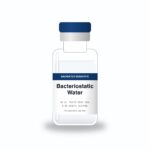
From BacWater Scientific
10 mL bacteriostatic water, stocked in the US
0.9% benzyl alcohol, multi-dose vials. The per-vial price drops automatically at 3, 5 and 10 vials.