A sealed vial of bacteriostatic water lasts until the expiration date printed on it. Once you puncture the stopper, the working limit is 28 days. Store it at room temperature, 20 to 25 °C (68 to 77 °F), and write the date on the vial the first time you open it.
Those are two separate clocks, and mixing them up is the most common mistake people make with bac water. An unopened vial is stable for a long time. An opened one is on a countdown that has nothing to do with the printed expiration date.
The two clocks at a glance
| State | How long it lasts | What sets the limit |
|---|---|---|
| Sealed, never punctured | Until the printed expiration date | Manufacturer stability data |
| Opened (first puncture) | Up to 28 days | USP <797> limit for multiple-dose containers |
| Solution you prepared with it | Depends entirely on the material dissolved | That material’s own documentation |
Unopened vials
An unopened vial is sterile, sealed and stable until its expiration date, assuming it has been stored properly. Manufacturers set that date from stability testing, and it accounts for both the sterility of the contents and the strength of the preservative over time.
Past the date, discard it. An expired vial can look perfectly clear and still be unusable, because neither sterility nor preservative concentration is something you can assess by eye.
This is also why buying a few vials at once makes sense: the in-use clock only starts when you open one. Sealed backups sit quietly until their printed date.
Opened vials: where the 28-day rule comes from
Once a needle has passed through the stopper, the vial is no longer a sealed system. Each entry carries a small chance of introducing microorganisms, and the stopper itself wears with every puncture.
The standard that governs this is USP General Chapter <797>, which covers sterile compounding. Its rule for conventionally manufactured multiple-dose containers is that once initially entered or punctured, the container should not be used for more than 28 days, unless the manufacturer specifies otherwise on the labeling.
That number is not about the water going stale. It is about how long a preserved, repeatedly entered container can be relied on. The 0.9% benzyl alcohol keeps stray bacteria from multiplying, but it is not a permanent guarantee, and no preservative compensates for a stopper that has been punctured a hundred times.
The one habit that matters: write the date on the label the first time you puncture a vial. Without it, day 28 is a guess, and most people guess generously.
Does bacteriostatic water need to be refrigerated?
No. This is the most repeated piece of misinformation about bac water, and it is easy to check. The FDA label for Bacteriostatic Water for Injection, USP lists storage as “Store at 20 to 25°C (68 to 77°F).” That is controlled room temperature. The label gives no instruction to refrigerate, either before or after opening.
Several popular articles claim the labeling recommends refrigeration after opening. It does not.
Is refrigerating it harmful?
No. Plenty of people keep an opened vial in the fridge next to materials that genuinely require cold storage, and that is fine. Two things to keep in mind:
- It does not extend the 28 days. The in-use limit comes from repeated entry, not temperature.
- Do not let it freeze. The back of a fridge or a freezer compartment can drop below freezing, which risks cracking the vial and damaging the stopper seal.
How to store bacteriostatic water properly
| Factor | What to do | Why |
|---|---|---|
| Temperature | 20 to 25 °C (68 to 77 °F) | The storage range on the FDA label |
| Refrigeration | Optional, not required | No labeled benefit, and it adds no time |
| Freezing | Avoid entirely | Can crack glass and unseat the stopper |
| Light | Keep out of direct sunlight | Standard practice for stored solutions |
| Heat | Away from hot cars, windowsills and radiators | Sustained heat is outside the labeled range |
| Stopper | Leave the flip cap on until first use, then wipe with 70% isopropyl alcohol before every entry | The stopper is the only barrier once the cap is off |
A practical setup: keep vials in their carton, in a cupboard away from a heat source, with the opened one marked clearly so you never reach for the wrong vial.
Signs a vial should be discarded early
Twenty-eight days is a maximum, not a guarantee. Throw a vial out before then if you see any of these:
- Cloudiness or haze in what should be perfectly clear liquid
- Floating particles, including small rubber fragments
- Any color at all
- A cracked or chipped vial
- A stopper that is torn, pushed in, or no longer reseals
- A vial that froze or sat somewhere very hot
- No date on the label, meaning you cannot confirm when it was opened
Rubber fragments specifically point at technique rather than the product. That is coring: the needle punching a plug out of the stopper. Our guide on drawing from a multi-dose vial covers how to prevent it.
What about solutions you have already mixed?
The 28-day clock belongs to the water vial, not to whatever you prepared with it. Once you dissolve something, storage and stability are determined by that material, and many reconstituted materials need refrigeration and have a much shorter usable life.
In practice, keep three dates in mind: the expiration on the sealed vial, the open date on the bac water vial, and the preparation date on whatever you mixed. Label all three.
Choosing a vial size you will actually finish
The 28-day window is really a sizing question. If you draw small volumes occasionally, a large vial mostly goes down the drain on day 28. That is why 10 mL is the practical middle ground for most bench work: enough for many withdrawals, small enough that little is wasted.
A workable habit:
- Keep one vial open and one or two sealed as backup.
- Date the open vial the moment you puncture it.
- When you open a backup, reorder so a sealed spare is always on hand.
- Discard the open vial at day 28 regardless of how much is left.
Quick reference
- Sealed: until the printed expiration date
- Opened: 28 days from first puncture
- Storage: 20 to 25 °C, out of light, never frozen
- Refrigeration: optional, adds nothing
- When in doubt: discard it. A vial costs a few dollars. A ruined preparation costs more.
Next: read bacteriostatic water vs sterile water, or the full guide to bacteriostatic water.
Frequently asked questions
How long does bacteriostatic water last after opening?
Up to 28 days from the first puncture of the stopper. That is the USP limit for a conventionally manufactured multiple-dose container, unless the manufacturer’s labeling specifies a different period.
Does bacteriostatic water need to be refrigerated?
No. The FDA label for Bacteriostatic Water for Injection lists storage at 20 to 25 °C (68 to 77 °F) and does not instruct refrigeration before or after opening.
Does refrigerating bacteriostatic water make it last longer?
No. The 28-day in-use limit is based on repeated entry of the container, not on temperature, so chilling an opened vial does not extend it.
How long does unopened bacteriostatic water last?
Until the expiration date printed on the vial, provided the seal is intact and it has been stored at room temperature.
Can you use bacteriostatic water after its expiration date?
No. After that date the manufacturer no longer guarantees sterility or preservative effectiveness, and neither can be judged by looking at the vial.
Can bacteriostatic water be frozen?
No. Freezing can crack the vial and compromise the stopper seal, and there is no benefit to offset that risk.
How do you know if bacteriostatic water has gone bad?
Discard it if the liquid is cloudy or discolored, if you see floating particles including rubber fragments, if the vial is cracked or the stopper is damaged, or if you cannot confirm when it was opened.
Does the 28-day rule apply to what I mixed with the water?
No. A solution you prepared has its own storage requirements, set by the material you dissolved, not by the bacteriostatic water.
Sources
- Bacteriostatic Water for Injection, USP prescribing label, DailyMed, U.S. National Library of Medicine dailymed.nlm.nih.gov
- USP General Chapter <797> Pharmaceutical Compounding: Sterile Preparations usp.org
- ASHP: Crosswalk of Guidance and Standards for Managing Beyond-Use Dates ashp.org
We write from primary sources such as FDA drug labels and USP standards. See our editorial policy. Spot an error? Email [email protected].
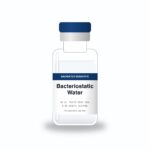
From BacWater Scientific
10 mL bacteriostatic water, stocked in the US
0.9% benzyl alcohol, multi-dose vials. The per-vial price drops automatically at 3, 5 and 10 vials.