Bacteriostatic water is hard to find because it is a low-margin sterile injectable made by very few manufacturers, sold under a prescription label, restricted on major marketplaces, and stocked thinly by everyone in the chain. Any one of those is manageable. Together they mean a single production problem empties shelves for months.
It is worth understanding why, because the reasons tell you exactly how to stop it from being your problem.
1. Very few companies make it
Bacteriostatic water for injection is a sterile, pyrogen-free pharmaceutical product made in regulated facilities. That is expensive to produce and it sells for a few dollars a vial, so only a handful of manufacturers supply the US market. A large share has historically come from Hospira, now part of Pfizer.
When a category depends on so few producers, there is no slack. A plant inspection, an equipment failure or a raw-material delay at one site propagates straight through distributors to pharmacies. Sterile injectables as a class are among the most shortage-prone products in US healthcare for exactly this reason, and bacteriostatic water for injection has shown up on shortage lists.
Check current status: the FDA drug shortage database and the ASHP shortage list both track it.
2. Hospitals are served first
When supply tightens, manufacturers put customers on allocation, meaning each account receives a share based on past purchasing. Hospitals and health systems buy in large, contracted volumes, so they are protected first. Small buyers at the end of the chain are the last to be filled and the first to see “backordered.”
This is why a shortage can feel invisible in clinical settings and total for everyone else.
3. The prescription label keeps it off shelves
Pharmaceutical Bacteriostatic Water for Injection, USP is an FDA-regulated drug product with a National Drug Code, dispensed on prescription. Two consequences follow:
- Retail pharmacies rarely stock it. Walk-in demand is low and it requires a prescription, so most will order it rather than shelve it.
- Marketplaces restrict it. Large platforms limit prescription-labeled products, so real listings vanish and lookalikes, usually sterile water or unspecified “reconstitution solution,” fill the search results.
The practical effect is that the two places most people look first are the two least likely to have it.
4. Demand has grown faster than supply
Bacteriostatic water is the standard diluent for reconstituting lyophilized powders, and the number of labs, researchers and small operations doing that work has grown substantially. More buyers chasing the same constrained supply means shortages bite faster and last longer when anything upstream goes wrong.
5. Nobody warehouses a $3 product
Margins are thin at every step, so distributors and resellers hold minimal stock and reorder only when they run low. That is efficient in normal times and fragile in tight ones. It also means “in stock” on a website sometimes means “my supplier says they have it,” which is not the same thing.
How to stop it being your problem
None of the causes above are things you can fix. The habits below are:
- Keep a sealed backup vial. Unopened vials last until their printed expiration date, because the 28-day in-use clock only starts at first puncture. A spare costs you nothing in waste.
- Reorder when you open your last vial, not when it is empty. Shipping takes days. This one habit converts most emergencies into non-events.
- Buy several at once. Multi-vial pricing is usually cheaper per vial and reduces how often you are exposed to a stockout.
- Buy from someone who holds inventory. Ask where orders ship from and how quickly they leave. Drop-shippers can show “in stock” while waiting on their own supplier.
- Know your fallback. For a single preparation used immediately, preservative-free sterile water may work. See bacteriostatic water vs sterile water.
What not to do: improvise. Making bacteriostatic water at home fails on sterility, pyrogens and verification, none of which you can check afterward.
How to read “out of stock” signals
- Pharmacy says “we can order it”: supply is probably fine, the item is simply not shelved.
- Distributor lists it as allocated or backordered: a real supply constraint at the manufacturer level.
- Marketplace listings vanish: usually a platform policy change, not a shortage.
- Several dedicated suppliers out at once: the strongest signal of an actual shortage. Check the FDA database before hunting further.
Our side of it
We built BacWater Scientific around this exact problem: one product, held in inventory in the US, priced so that ordering ahead is the cheaper choice rather than a luxury. Join the launch list for 10% off your first order, or compare every buying route in where to buy bacteriostatic water.
Frequently asked questions
Is there a bacteriostatic water shortage?
Bacteriostatic water for injection has appeared on US drug shortage lists, and supply depends on a small number of manufacturers. The FDA drug shortage database lists the current status.
Why don't pharmacies stock bacteriostatic water?
It carries a prescription label and has low walk-in demand, so many pharmacies only order it against a prescription rather than keeping it on the shelf.
Why do marketplace listings keep disappearing?
Large marketplaces restrict prescription-labeled products, so genuine listings get removed and adjacent products such as sterile water fill the search results.
How can I avoid running out?
Keep one or two sealed vials in reserve, reorder as soon as you open your last one, and buy several at a time when per-vial pricing makes it cheaper.
Does a shortage mean the product is unsafe?
No. Shortages are supply problems, generally caused by manufacturing, capacity or distribution issues rather than by anything wrong with the product itself.
Where can I check the current shortage status?
The FDA drug shortage database and the ASHP shortage list both track bacteriostatic water for injection.
Sources
- FDA Drug Shortages Database dps.fda.gov
- ASHP Drug Shortages List ashp.org
- Bacteriostatic Water for Injection, USP prescribing label, DailyMed, U.S. National Library of Medicine dailymed.nlm.nih.gov
We write from primary sources such as FDA drug labels and USP standards. See our editorial policy. Spot an error? Email [email protected].
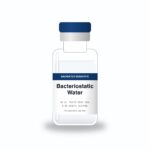
From BacWater Scientific
10 mL bacteriostatic water, stocked in the US
0.9% benzyl alcohol, multi-dose vials. The per-vial price drops automatically at 3, 5 and 10 vials.