Bacteriostatic water is sterile water with 0.9% benzyl alcohol added as a preservative, so the same vial can be entered repeatedly for up to 28 days. Sterile water contains no preservative at all, which makes it a single-use product: you open it, use it, and discard what’s left.
That’s the whole difference. Everything else in this guide follows from it. Both liquids are clear, both are sterile in the sealed vial, and both come in stoppered vials that look nearly identical on a shelf. One of them just happens to survive contact with a needle more than once.
Side-by-side comparison
| Bacteriostatic water | Sterile water | |
|---|---|---|
| Full name | Bacteriostatic Water for Injection, USP | Sterile Water for Injection, USP |
| Contents | Water for injection + 0.9% benzyl alcohol (9 mg/mL) | Water for injection only |
| Preservative | Yes | No |
| Container type | Multiple-dose vial | Single-dose vial or ampoule |
| After first entry | Usable up to 28 days | Use once, discard the remainder |
| Salt content | None | None |
| Typical use | Diluent when the vial will be re-entered | Diluent for a single preparation, or when a preservative must be avoided |
What sterile water is
Sterile Water for Injection is exactly what the name says: highly purified water that has been sterilized and is free of pyrogens (substances such as bacterial endotoxins that can cause fever-like reactions). Nothing has been added to it. No preservative, no salt, no buffer.
That purity is a strength and a weakness. It’s the cleanest possible solvent, which matters when anything extra could interfere with what you’re dissolving. But the moment you breach the seal, there is nothing in the vial to discourage microbial growth, so the accepted practice is to use it once and discard the remainder.
What bacteriostatic water is
Bacteriostatic water starts as the same water for injection and adds one ingredient: benzyl alcohol at 0.9%, which works out to 9 mg per mL. Its label describes it as a “sterile, nonpyrogenic preparation of water for injection” with that concentration of benzyl alcohol “added as a bacteriostatic preservative.”
Benzyl alcohol is bacteriostatic, not bactericidal. It stops bacteria from multiplying rather than killing them outright. That’s enough to keep the small number of organisms that might sneak in during a needle puncture from turning the vial into a culture. It’s not enough to rescue a badly contaminated solution, which is why careful technique still matters. See what bacteriostatic water is for the full breakdown.
Single-dose vs multiple-dose: the part that actually costs you money
The preservative is a chemistry fact. The practical consequence is packaging.
- Sterile water is packaged for one use. A vial is meant to be opened, used and discarded. If you need 1 mL from a 10 mL vial, the other 9 mL is waste.
- Bacteriostatic water is packaged for repeat use. A multiple-dose vial can be entered many times, and under USP <797> it may be used for up to 28 days after the first puncture unless the manufacturer’s label says otherwise.
So while the two products cost about the same per vial, they don’t cost the same per use. If your work is spread over weeks, sterile water either forces you to buy more vials or forces you to break the single-use rule. Bacteriostatic water is designed for exactly that pattern.
Rule of thumb: one preparation, right now, immediately used? Sterile water is fine. More than one draw from the same vial over days or weeks? You need the preservative.
When sterile water is the better choice
Preservative-free isn’t a downgrade. It’s the right call when:
- A protocol specifies preservative-free diluent. Some materials are sensitive to benzyl alcohol, or a downstream analysis would be affected by it. If the documentation names a diluent, follow it.
- Everything is used at once. A single preparation consumed immediately gains nothing from a preservative.
- The product label requires it. Manufacturer instructions for a specific powder override general practice.
The label for bacteriostatic water also flags contexts where benzyl alcohol is not appropriate, including use in newborns, because of the potential toxicity of the preservative. That’s a clinical consideration rather than a lab one, but it explains why preservative-free sterile water exists as a separate product at all.
When bacteriostatic water is the better choice
- You’ll draw from the vial more than once. The single most common reason.
- Work is spread over days or weeks. The 28-day window covers most bench projects.
- You want less waste. One 10 mL bacteriostatic vial can replace a stack of single-use vials.
- Convenience matters. A stoppered multiple-dose vial that reseals is simply easier to work with than snapping open a fresh ampoule each time.
Can you substitute one for the other?
Sterile water in place of bacteriostatic water
For a single, immediate preparation, generally yes. What you lose is storage: you cannot keep the opened vial and come back to it next week. Treat the rest as waste.
Bacteriostatic water in place of sterile water
Usually fine, with two caveats. First, check that benzyl alcohol is compatible with whatever you’re dissolving. Second, if a protocol explicitly calls for a preservative-free diluent, follow the protocol rather than what’s convenient.
Neither: tap, distilled or deionized water
Not a substitute at any point. Distilled and deionized water from a hardware store or pharmacy shelf are purified, but they are not sterile and not pyrogen-free. Purity and sterility are different properties, and only one of them can be achieved with a filter.
What about saline and bacteriostatic saline?
Two more vials that look the same and aren’t:
- Normal saline is 0.9% sodium chloride in water, with no preservative. It’s isotonic, meaning its dissolved-particle concentration is close to that of body fluids. Single use.
- Bacteriostatic sodium chloride is that same saline with 0.9% benzyl alcohol added, so it behaves like bacteriostatic water but contains salt.
Neither water product contains salt. If a method calls for a saline diluent, neither sterile nor bacteriostatic water is a drop-in replacement.
How to tell them apart
They look identical, so read the label every time. Look for:
- The word “Bacteriostatic.” If it isn’t there, assume there’s no preservative.
- “Benzyl alcohol 0.9%” in the contents. This is the actual evidence.
- “Single-dose” or “preservative-free.” Both mean sterile water, use once.
- “Multiple-dose.” Indicates a preserved product intended for repeat entry.
- Lot number and expiration date. Any legitimate vial has both.
Be wary of vague names. Products marketed as “reconstitution solution” vary in what they contain, and some add acetic acid to lower the pH. If a listing won’t state the preservative and its concentration, you can’t assume anything from the product name.
Storage: mostly the same, with one difference that matters
Both are stored at controlled room temperature. The FDA label for bacteriostatic water specifies 20 to 25 °C (68 to 77 °F) and does not call for refrigeration, before or after opening. Neither should be frozen.
The difference is the clock after opening. Sterile water has no in-use window to speak of, because it is not meant to be stored after opening. Bacteriostatic water has a 28-day window that you should start tracking by writing the date on the vial. Our guide to how long bacteriostatic water lasts covers storage and the signs a vial should be discarded early.
The short version
Sterile water is pure water in a single-use container. Bacteriostatic water is the same water with a preservative that buys you 28 days of repeat access. If your work happens in one sitting, either works. If it happens over time, only one of them is designed for it.
Next: see the full guide to bacteriostatic water, or work out volumes with the bac water calculator.
Frequently asked questions
What is the difference between bacteriostatic water and sterile water?
Bacteriostatic water is sterile water with 0.9% benzyl alcohol added as a preservative, which lets the same vial be entered repeatedly for up to 28 days. Sterile water contains no preservative and is intended for a single use, with any remainder discarded.
Can I use sterile water instead of bacteriostatic water?
For a single preparation that is used immediately, sterile water generally works. What you lose is the ability to store and re-enter the vial, so anything left over should be discarded rather than saved.
Can I use bacteriostatic water instead of sterile water?
Usually yes, unless benzyl alcohol is incompatible with the material you are dissolving or the protocol specifically calls for a preservative-free diluent.
Is sterile water cheaper than bacteriostatic water?
Per vial they are similar in price, but sterile water can cost more in practice because a single use consumes the whole vial, while one bacteriostatic vial can serve many preparations within 28 days.
Which one do labs use to reconstitute lyophilized powders?
Bacteriostatic water is the common choice when the same water vial will be drawn from more than once. Preservative-free sterile water is used when the protocol requires it or the material is sensitive to benzyl alcohol.
Does sterile water expire faster than bacteriostatic water?
Unopened, both last until their printed expiration dates. The difference appears after opening: bacteriostatic water is good for 28 days, sterile water should be used immediately and the rest discarded.
Sources
- Bacteriostatic Water for Injection, USP prescribing label, DailyMed, U.S. National Library of Medicine dailymed.nlm.nih.gov
- USP General Chapter <797> Pharmaceutical Compounding: Sterile Preparations usp.org
- ASHP: Crosswalk of Guidance and Standards for Managing Beyond-Use Dates ashp.org
We write from primary sources such as FDA drug labels and USP standards. See our editorial policy. Spot an error? Email [email protected].
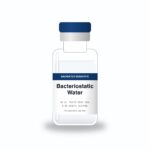
From BacWater Scientific
10 mL bacteriostatic water, stocked in the US
0.9% benzyl alcohol, multi-dose vials. The per-vial price drops automatically at 3, 5 and 10 vials.